Normalmente, os pedidos são entregues para Portugal em 48 horas dependendo da localização.
Entrega grátis para Portugal nos pedidos de 50 EUR ou mais. Um custo de entrega de 18 EUR será cobrado em todos os pedidos menores que 50 EUR.
Frete pré-pago da UPS ou FedEx: DDP (encargos e alfândega pagos pela DigiKey)
Frete pré-pago da DHL: CPT (encargos, alfândega e VAT devidos no momento da entrega)
Conta de crédito para instituições e empresas qualificadas
Pagamento adiantado por transferência bancária
![]()
![]()
![]()
![]()


Mais produtos de Parceiros completamente autorizados
Prazo médio para envio de 1 a 3 dias, pode haver cobranças extras de envio. Consulte a página do produto, carrinho e conclusão da compra para saber a rapidez real do envio.
Incoterms: CPT (encargos, alfândega e VAT/imposto devido aplicável no momento da entrega)

Para mais informações consulte Ajuda e Suporte
In this tutorial, we'll create a very simple button-controlled blinking LED program using Embassy's async functions and task spawning, demonstrating how async/await syntax allows you to write concurrent code that appears sequential while the executor efficiently switches between tasks.
In this tutorial, we’ll explore how to use the Raspberry Pi Debug Probe to perform step-through debugging in Rust.
In this tutorial, we'll explore how to configure and handle timer interrupts on the Raspberry Pi Pico 2, creating a blinking LED program where the processor spends most of its time sleeping while hardware interrupts handle all the timing.
In this tutorial, we'll explore how to apply TDD principles to embedded Rust by writing unit tests for our TMP102 driver library.
In this tutorial, we'll learn how to create a reusable library (crate) in Rust by extracting our TMP102 sensor code into a separate package that can be shared across multiple projects.
In this tutorial, we'll explore how to communicate with external digital devices using Inter-Integrated Circuit (I2C), one of the most popular communication protocols in embedded systems.
In this tutorial, we'll expand our blinking LED project to add USB serial communication, enabling us to send debug messages from our Raspberry Pi Pico 2 to a computer.
This guide walks you through the process of blinking an LED with embedded Rust on a Raspberry Pi Pico 2 (RP2350).
In this tutorial, we look at the history of Rust, its advantages and disadvantages, and show how to create a basic "Hello, World!" application.
Use a Pico W or Pico 2W to bridge a wireless keyboard to a USB host.
Clear overview of HSTX architecture—async FIFO, command expander, output shifters—and where it fits in maker projects.
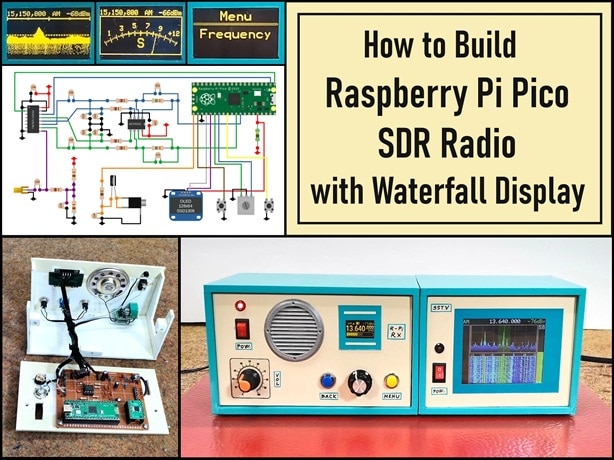
This project demonstrates the incredible potential of software-defined radio, transforming a few simple components into a powerful and flexible communication tool.
Obrigado!
Fique de olho em sua caixa de entrada para notícias e atualizações da DigiKey!
Digite um endereço de e-mail
Por favor, marque a caixa de seleção